Medetomidine and Atipamezole: Clinical Considerations for Sedation and Reversal
Medetomidine provides alpha-2-mediated sedation and analgesia, with the option of antagonism using atipamezole. In clinical practice, this reversibility must be considered alongside patient selection, cardiovascular effects, concurrent drugs and the provision of analgesia after reversal.
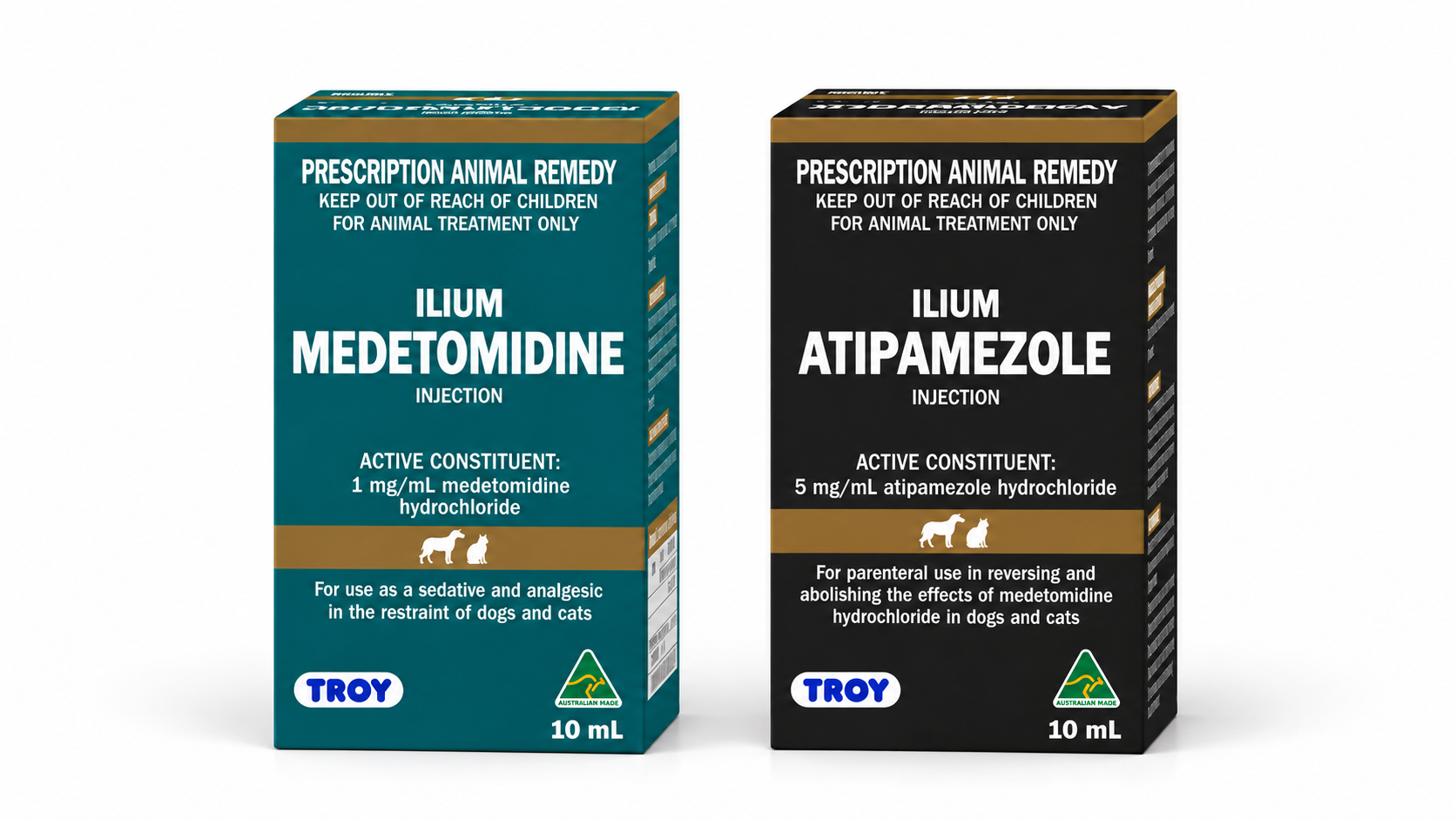
Troy Animal Healthcare’s range includes ilium Medetomidine Injection, containing medetomidine hydrochloride 1 mg/mL, and ilium Atipamezole Injection, containing atipamezole hydrochloride 5 mg/mL. Both are supplied in 10 mL vials for use in dogs and cats.
Medetomidine: account for more than sedation depth
Medetomidine is a selective alpha-2 adrenoceptor agonist with sedative, analgesic and muscle-relaxant properties. Central alpha-2 receptor activation reduces noradrenaline release, while peripheral receptor stimulation produces vasoconstriction and an initial increase in arterial blood pressure. Bradycardia accompanies these effects, and cardiac output may decrease.
These haemodynamic effects make patient selection important. Pre-existing cardiovascular, respiratory, hepatic or renal disease may limit suitability or constitute a contraindication, depending on the applicable product label. Assessment should extend beyond the required depth of restraint to the patient’s capacity to tolerate the physiological effects of the protocol.
Medetomidine also has marked anaesthetic-sparing effects. When incorporated into a balanced anaesthetic protocol, induction and maintenance requirements may be reduced; concurrent agents should therefore be adjusted and titrated to effect.

Plan analgesia independently of sedation
Sedation depth is not a reliable indicator of adequate analgesia. Medetomidine’s analgesic effect may be shorter than its sedative effect, and additional analgesia should be provided where the procedure or anticipated postoperative pain requires it.
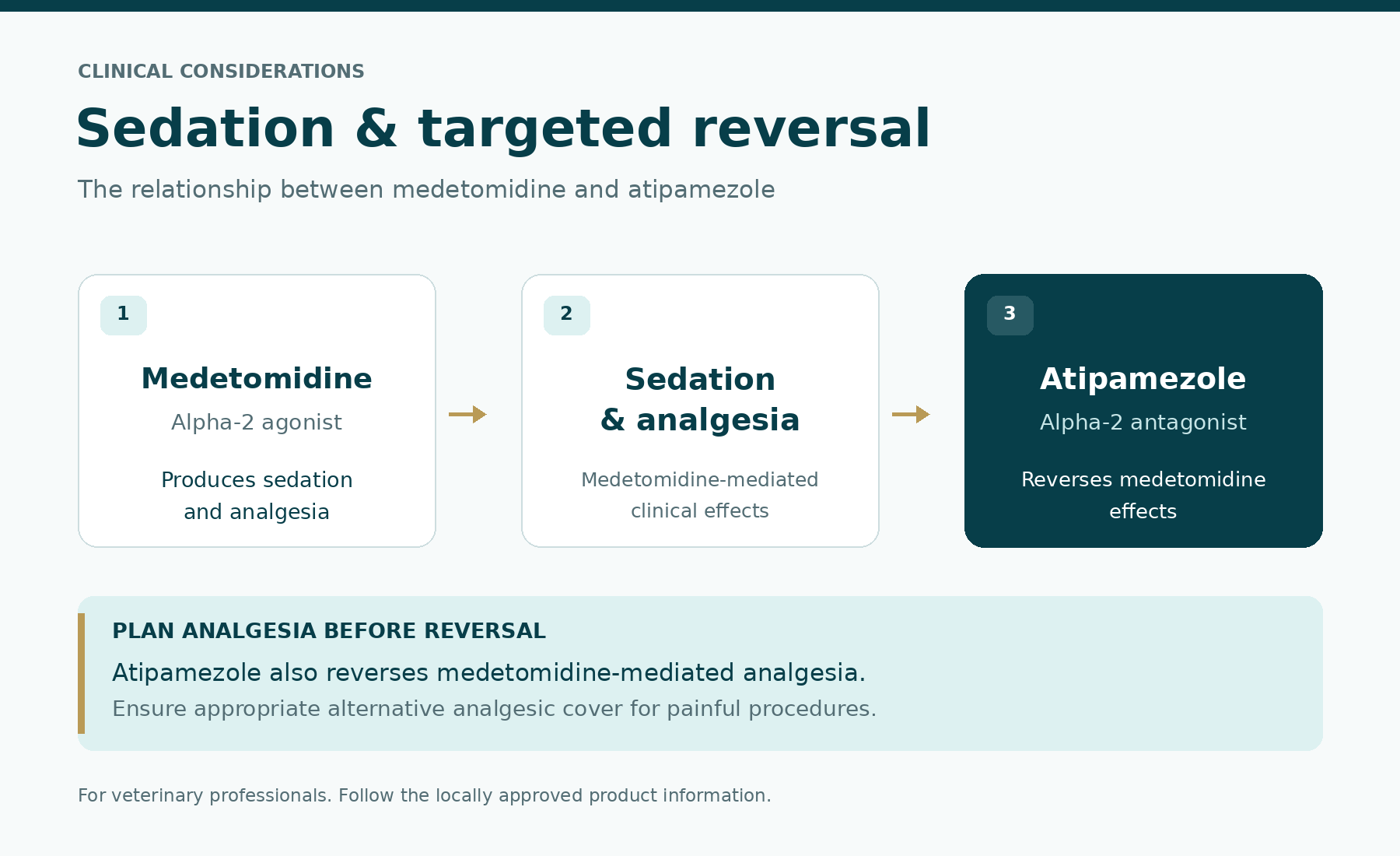
This becomes particularly relevant when reversal is planned. Atipamezole antagonises medetomidine-mediated analgesia as well as sedation. Troy’s product information specifically advises additional pain relief when reversing medetomidine after a painful procedure. Appropriate analgesic cover should therefore be established before reversal.
Atipamezole: targeted reversal within the complete protocol
Atipamezole is a selective alpha-2 adrenoceptor antagonist. Troy’s ilium Atipamezole Injection is indicated for reversal of medetomidine’s effects in dogs and cats, including its sedative and analgesic effects.
Reversal should be a clinical decision rather than an automatic endpoint. The AAHA anaesthesia guidelines recommend alpha-2 antagonism when patients are excessively sedated or rapid recovery is required.
The complete drug protocol must be reviewed before administration. Atipamezole does not reverse ketamine, and Troy’s product information includes precautions concerning its use after medetomidine–ketamine combinations. Species, elapsed time and the relevant product directions must inform the decision.
Continue monitoring through recovery
Reversal does not remove the requirement for monitoring and supportive care. Sedated patients require appropriate physiological assessment, with oxygen supplementation and airway support available according to sedation depth and clinical need. During recovery, monitoring should continue to assess cardiovascular and respiratory function, temperature and patient comfort.
Troy’s atipamezole information also identifies transient hypotension, excitement, tachycardia and occasional recurrence of sedation as potential considerations following administration. Patients should recover under supervision in a quiet environment.
For product information on Troy’s ilium Medetomidine Injection and ilium Atipamezole Injection, contact The Veterinary Group.
For veterinary professionals. Refer to the locally approved product information for full indications, contraindications, dosing, administration and precautions.
Loading...