Central Nervous System
For Horses
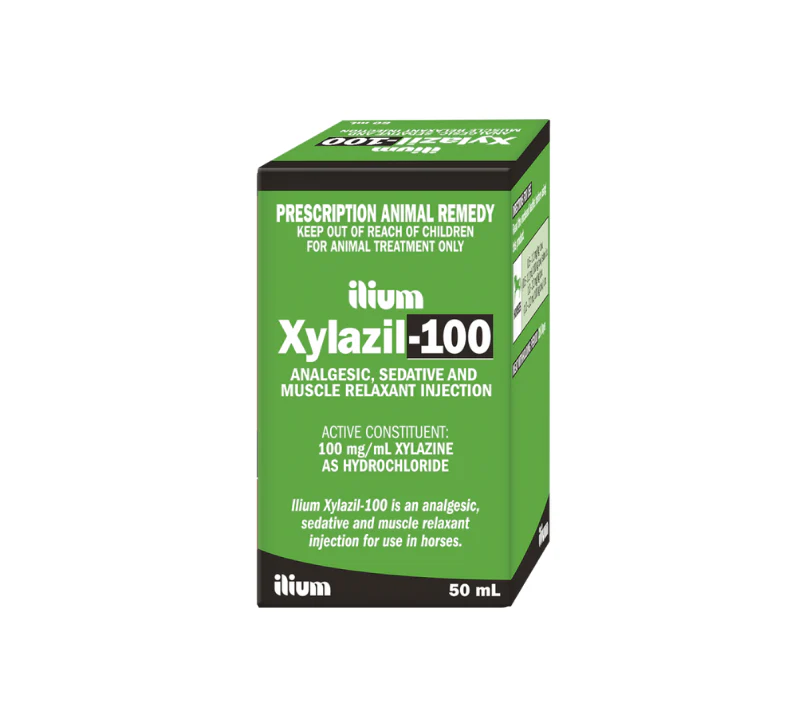
For use as an analgesic, sedative and muscle relaxant in horses.
Active ingredient: Xylazine Hydrochloride 100 mg/ml
(PLEASE TAKE NOTE: This product is a controlled item and can only be distributed to registered veterinary clinics and hospitals. We will require a printed LPO with stamp, signature & order date before item is dispatched).
Pack size: 50ml vial ready for injection
Indication of use: ilium Xylazil-100 produces dose dependent sedation and analgesia through an alpha-mimetic and direct opioid effect. It also produces muscle relaxation by inhibition of the intraneuronal transmission of impulses centrally in the CNS. Onset of action after intravenous injection is rapid with effective sedation present within 3-5 minutes and after intramuscular or subcutaneous administration, it occurs within 10-15 minutes. The sedative effect usually lasts 1-2 hours, while the analgesic effect lasts only 30-40 minutes. The analgesic effect in the horse is not as profound as in cattle. The usual response to ilium Xylaxil-100 administration in the horse is drooping of the head, ataxia without recumbency, penile prolapse which does not progress to paraphimosis, and pendulous lower lip. Complete recovery varies with the dose administered, however, it is usually uneventful and requires minimal supervision.
Dosage:
ilium Xylazil-100 is an extremely useful sedative in the horse, allowing a number of procedures to be more easily conducted e.g. ophthalmic examination, wound suturing and standing surgery (such as castration) in association with appropriate local anaesthesia, stomach tubing or endoscopic examination of fractious patients, radiography, dentistry, bandage application and removal etc. ilium Xylazil-100 is also a very effective premedicant for both ketamine and barbiturate anaesthesia.
Dose rate: 0.5-1.1 mg/kg b.w. (0.5-1.1ml/100kg body weight) by intravenous injection.
It is normal for ilium Xylazil-100 to cause cardiopulmonary depression manifested by a decrease in heart rate, stroke volume, cardiac output and respiratory rate together with an increase in total peripheral resistance. These effects are transitory and of no clinical significance in healthy horses. However, it is not recommended to use ilium Xylazil-100 where there is cardiovascular disease including conditions of shock, or respiratory depression. A number of cardiac dysrhythmias such as second-degree atrioventricular block, have been encountered with xylazine administration and it is believed that increased vagal tone is responsible for these. Premeditation with atropine sulphate will help prevent their occurrence, although care must be taken as atropine sulphate is known to be associated with colic in the horse. ilium Xylazil-100 should not be administered to mares in the last trimester of pregnancy as it may precipitate an early parturition or abortion due to its oxytocic effect on the uterus. ilium Xylazil-100 should not be administered intra-arterially Painful stimuli may cause an apparently deeply sedated patient to react inappropriately and, therefore, adequate care should be taken.
Storage: Use the contents within six months of first broaching the vial. Discard the unused portion. Store below 30°C (Room Temperature).