Feeding Horses That Struggle to Maintain Weight in the UAE
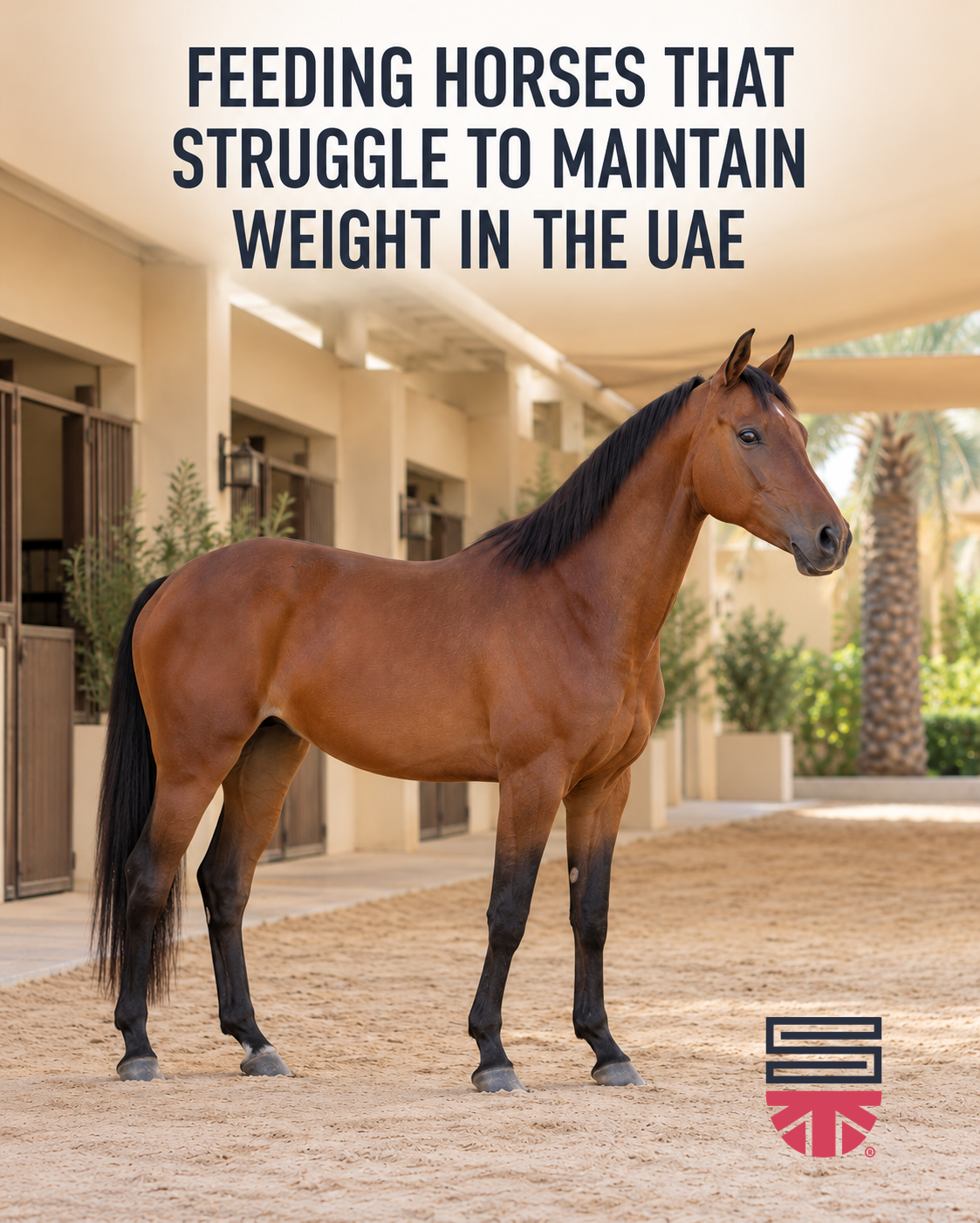
Feeding Horses That Struggle to Maintain Weight in the UAE
Is your horse losing condition despite receiving regular meals? Before increasing the feed, it is important to understand why. Workload, forage intake and health all influence whether a horse can maintain an appropriate bodyweight. A feeding plan should address the cause of poor condition as well as the need for additional calories.
For horses managed in hot conditions, there is another consideration: heat stress can reduce feed intake and contribute to weight loss. Monitoring appetite, hydration and body condition is therefore an important part of feeding management during hot weather.
Start by Understanding the Weight Loss
A horse that needs additional calories to maintain condition is often called a “poor doer”. However, ongoing weight loss should not simply be accepted as normal for that horse.
Dental problems, gastric ulcers, parasites, chronic pain and other illnesses can contribute to poor condition. Work with your veterinarian to investigate unexplained weight loss before relying on a change of feed. Severely underweight horses need a supervised feeding plan.
Assess condition using more than appearance alone. Body condition scoring evaluates fat coverage over areas including the ribs, neck, back and tail head. Recording these assessments regularly helps identify changes and monitor progress.
Make Forage the Foundation
Good-quality forage should remain the basis of the ration, even when a horse needs additional calories. Concentrate feed can help when forage alone cannot maintain condition, but it should complement an appropriate forage allowance.
Review how much hay your horse actually eats, rather than only how much is offered. Weighing forage and noting leftovers can help assess intake. Forage analysis can also help identify its nutritional contribution and guide the choice of supplementary feed.
If chewing is difficult, simply offering more hay may not solve the problem. Horses with poor dentition may need suitable forage alternatives alongside dental assessment.
Choose Additional Calories to Suit the Horse
When forage is insufficient to maintain weight, select supplementary feed according to the horse’s workload, health and nutritional requirements. Feeding rates should reflect the individual horse and the contribution of the whole ration.
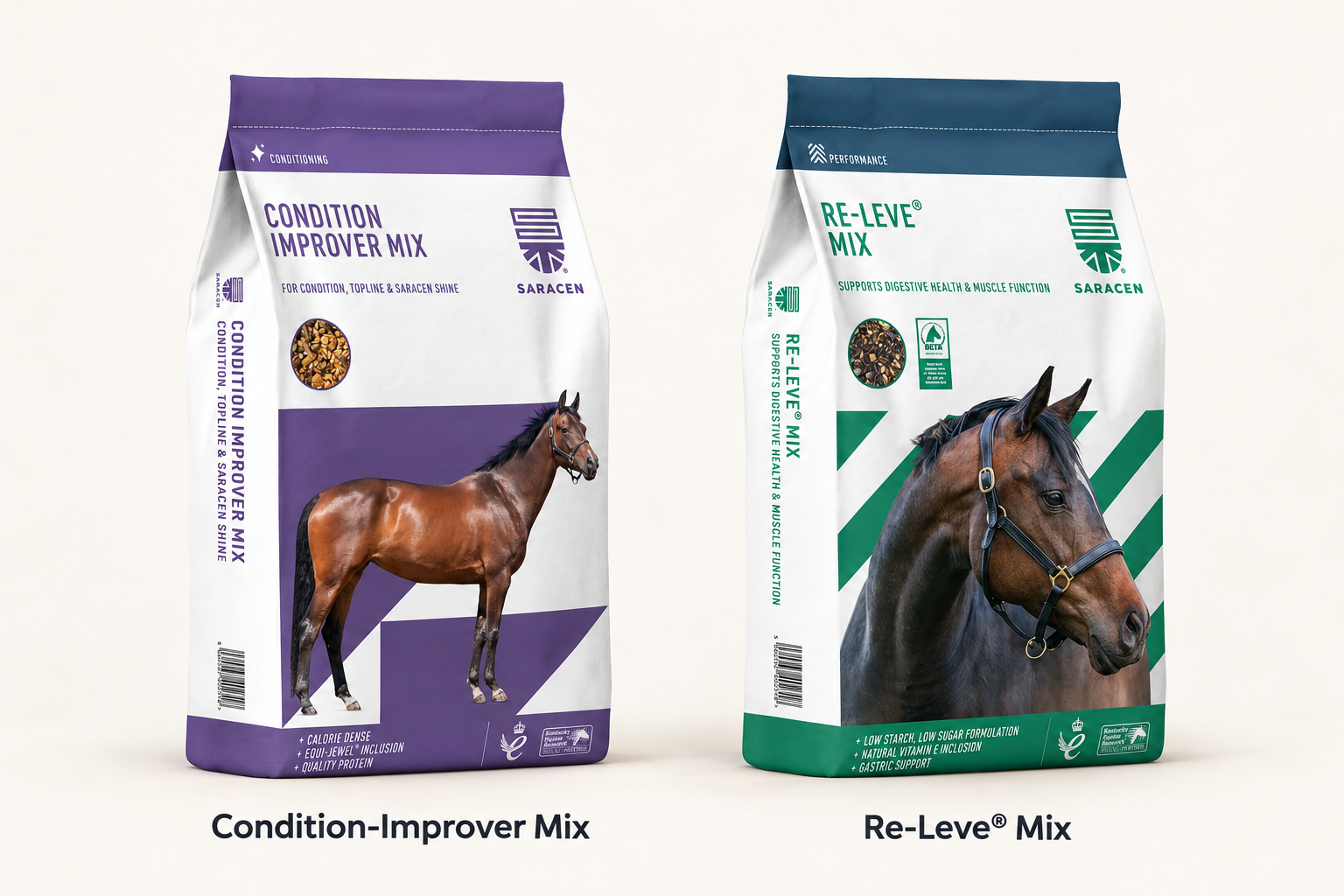
Saracen Condition-Improver Mix is an option for horses needing additional condition. Saracen formulates this calorie-dense, oat-free feed for weight gain and muscle development, including horses with limited appetites. It contains Equi-Jewel® and live yeast.
However, oat-free does not mean low starch. Its published starch content is 23%, so suitability should be assessed carefully where a horse requires starch restriction.
Saracen Re-Leve® Mix offers an alternative for horses needing a high-calorie, lower-starch ration. This cereal-free feed provides energy through fibre and oil and has a published starch content of 8%. Saracen identifies it as suitable for horses prone to equine gastric ulcer syndrome, and it carries BETA EGUS approval.
Feed selection should be part of the wider veterinary and nutritional plan, particularly when an underlying health problem contributes to weight loss.
Support Intake During Hot Weather
For UAE yards managing horses in hot conditions, feeding and cooling routines need to work together. Provide clean, fresh water, shade and adequate airflow, and schedule exercise during cooler periods. These measures help reduce heat stress, which can affect appetite and bodyweight.
Horses sweating heavily may also need an appropriate equine electrolyte supplement. If electrolytes are added to drinking water, always provide a separate source of plain water.
.png)
Introduce Changes Gradually and Monitor Progress
Weigh concentrate feeds rather than relying on scoop volume, and divide the daily allowance into smaller meals. Follow the product’s feeding guidance and adjust the ration according to bodyweight, condition and workload.
Introduce dietary changes gradually, generally over around two weeks, to allow the digestive system to adapt. Continue monitoring appetite and body condition. If your horse keeps losing weight, seek veterinary reassessment rather than repeatedly increasing feed.
Frequently Asked Questions About Feeding Underweight Horses
Q: Why Is My Horse Losing Weight Despite Being Fed Regularly?
A: Regular meals may not supply enough calories for the horse’s needs. Dental problems, parasites, gastric ulcers and other illnesses can also contribute. Unexplained weight loss should be investigated before simply increasing feed.
Q: What Is the Best Horse Feed for Weight Gain?
A: There is no single best feed for every horse. Start with suitable forage and assess the whole diet. Condition-Improver Mix is formulated for weight gain, while Re-Leve® Mix offers a lower-starch alternative.
Q: Can Hot Weather Cause Horses to Lose Weight?
A: Yes. Heat stress can reduce feed intake and contribute to weight loss. Monitor appetite, provide water and cooling measures, and investigate continued loss of condition.
Q: Is Saracen Condition-Improver Mix Low in Starch?
A: It is oat-free, but should not be described as low starch. Saracen lists 23% starch for Condition-Improver Mix, compared with 8% for Re-Leve® Mix.
Q: Is Re-Leve® Mix Suitable for Horses Prone to Gastric Ulcers?
A: Saracen identifies Re-Leve® Mix as suitable for ulcer-prone horses, and it carries BETA EGUS approval. Suspected ulcers still require veterinary assessment and an appropriate management plan.
Q: Should I Give My Underweight Horse Larger Meals?
A: Review forage intake first. If additional concentrate is needed, divide the daily allowance into smaller meals, weigh the portions and make changes gradually.
Need help choosing a Saracen feed? Contact The Veterinary Group at sales@thevet.group to discuss the range and your horse’s requirements.
Loading...