Equine Sedation: Understanding When and Why Horses Need Sedation
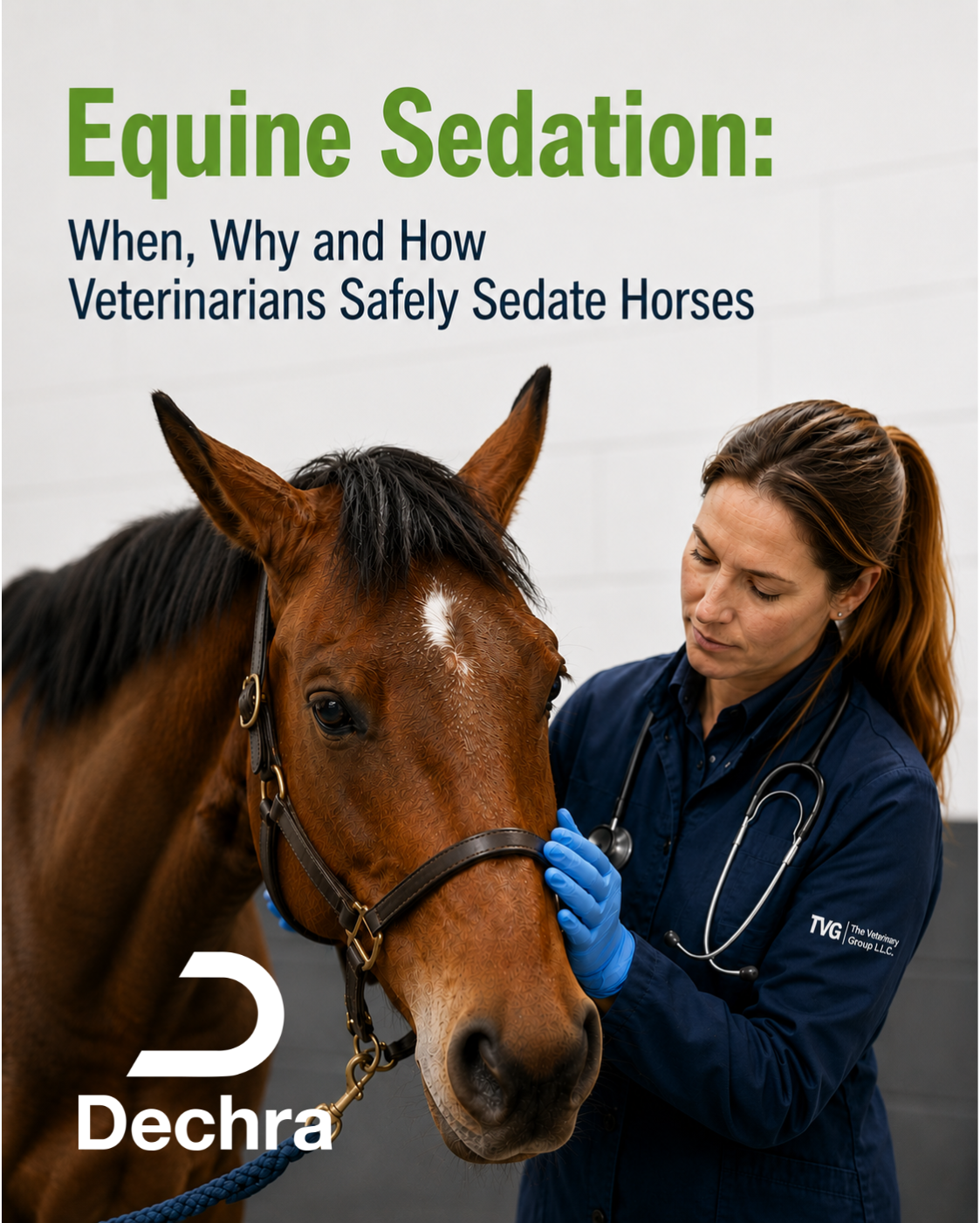
Handling horses during veterinary procedures requires careful planning to protect both the animal and the veterinary team. Even calm, well-trained horses can become anxious, or unpredictable during examinations and treatments, making sedation an important part of modern equine medicine.
Sedation is not simply about making a horse stand still. It is a carefully controlled medical technique that helps reduce stress, improve patient welfare, and allow veterinarians to perform procedures safely and effectively.
What Is Equine Sedation?
Sedation is the controlled reduction of a horse's awareness and responsiveness through the use of veterinary medicines. Rather than producing unconsciousness, sedation creates a calmer, more relaxed state while maintaining the horse's ability to stand.
Sedatives reduce excitement within the central nervous system and promote muscle relaxation, helping horses tolerate examinations and procedures that might otherwise cause fear, discomfort or injury. When administered appropriately by a veterinarian, modern sedatives have an established safety profile and are widely used in equine practice.
.png)
Why Might a Horse Need Sedation?
Sedation may be recommended whenever movement, anxiety or discomfort could interfere with a veterinary procedure or compromise safety.
Common situations include:
- Dental examinations and dental treatment
- Endoscopy and other diagnostic procedures
- Rectal and reproductive examinations
- Hoof care and corrective farriery
- Wound treatment and suturing
- Tendon assessment and imaging
- Stomach tubing
- Minor surgical procedures
- Clipping or handling horses that become anxious during routine care
By reducing stress and movement, sedation allows procedures to be completed more efficiently while improving comfort for the horse and reducing risk for handlers.
Understanding Different Levels of Sedation
The level of sedation required depends on the individual horse and the procedure being performed.
- Light sedation is often sufficient for routine management procedures where the horse simply needs to be calmer while remaining responsive.
- Moderate sedation produces a more relaxed horse, often with a lowered head, drooping lower lip and reduced reaction to external stimuli. This level is commonly used for dental work and diagnostic imaging.
- Deep sedation is reserved for more invasive or uncomfortable procedures. Horses remain standing but become markedly drowsy and require close veterinary supervision throughout the procedure.
The appropriate level is determined by the veterinarian after assessing the horse's temperament, health status and the nature of the procedure.
Sedation Is Different from General Anaesthesia
Although the terms are sometimes confused, sedation and general anaesthesia are very different.
During sedation, the horse remains conscious and standing but is significantly calmer and less reactive.
General anaesthesia involves complete loss of consciousness and is required for major surgical procedures. Because horses must lie down under general anaesthesia, specialised facilities, continuous monitoring and careful recovery management are essential. Equine anaesthesia carries greater risks than in many other domestic species due to the horse's size, physiology and recovery process.
Whenever possible, veterinarians choose standing procedures performed under appropriate sedation rather than general anaesthesia, as this may reduce overall risk for suitable cases.
Caring for Horses After Sedation
Recovery from sedation is usually straightforward, although the time required varies depending on the medication used, the dose administered and the procedure performed.
Following sedation, horses should recover in a quiet, safe environment with minimal disturbance. Feed should not be offered until swallowing has returned to normal, as sedated horses may attempt to eat before they are fully coordinated, increasing the risk of choking.
Normal activity should only resume once the veterinarian confirms that recovery is complete and the horse is safe to return to work or turnout.
For competition horses, owners should also discuss withdrawal and detection times with their veterinarian, as sedative medications are regulated under competition rules.
.png)
Sedation as Part of Modern Pain Management
Equine pain management often requires more than one approach. Pain begins when specialised nerve endings detect tissue injury before signals travel through the nervous system and are ultimately processed by the brain.
Different medications act at different points along this pain pathway. Modern veterinary medicine frequently combines multiple classes of medicines to improve patient comfort through a multimodal approach to analgesia, allowing veterinarians to tailor treatment according to the horse's needs.
Appropriate sedation often forms an important component of this overall strategy by reducing stress, facilitating procedures and supporting effective patient management.
Supporting Equine Procedures with Dechra Domidine®
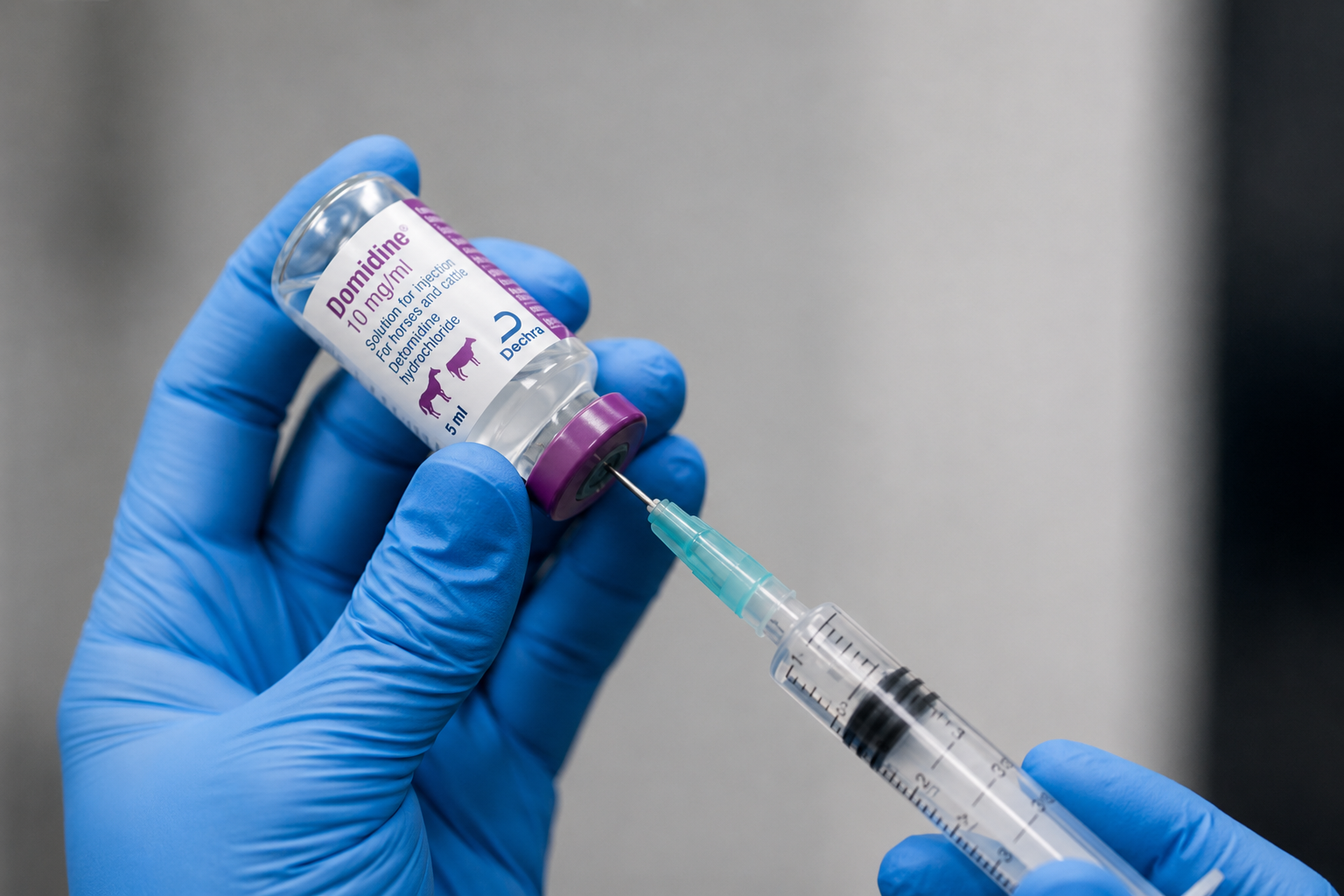
For veterinarians requiring reliable standing sedation and premedication, Dechra Domidine® (detomidine hydrochloride 10 mg/ml solution for injection) is licensed for use in horses and cattle.
Domidine® contains the alpha-2 agonist detomidine hydrochloride and is indicated for sedation and premedication before injectable or inhalation anaesthesia. It may be administered by either intravenous or intramuscular injection, providing flexibility for different clinical situations.
Common veterinary applications include:
- Premedication before general anaesthesia
- Endoscopy and diagnostic examinations
- Rectal and gynaecological examinations
- Dental procedures
- Tendon treatment
- Hoof care
- Stomach tubing
- Minor standing surgical procedures
Detomidine has been used in equine practice for many years, and comparative studies have demonstrated that Domidine® performs comparably to the original detomidine formulation while maintaining an established safety profile when used according to veterinary directions.
As with all prescription veterinary medicines, Domidine® should only be administered by, or under the direction of, a veterinarian following an appropriate clinical assessment.
Loading...