Diagnosis and Treatment of Addison's Disease in Dogs: Practical Clinical Insights from the Dechra Educational Series
Addison's disease may be uncommon - but it should never be overlooked.
Canine hypoadrenocorticism, more commonly known as Addison's disease, has earned the nickname "The Great Pretender" for good reason. Its clinical signs are often vague, intermittent and easily mistaken for many other conditions, making diagnosis one of the biggest challenges faced in small animal practice.
To help veterinary professionals recognise and manage this complex endocrine disorder with greater confidence, The Veterinary Group recently hosted another successful session in the Dechra Educational Series, featuring Dr Ceri Bailey BVSc MRCVS, Companion Animal Veterinary Technical Manager at Dechra.
The webinar explored practical approaches to diagnosing Addison's disease, recognising an Addisonian crisis, and developing long-term treatment plans using evidence-based monitoring strategies. This article summarises some of the key clinical messages shared during the session together with the additional educational resources made available to veterinary professionals.
Why is Addison's Disease Called "The Great Pretender"?
One of the biggest challenges with Addison's disease is that many affected dogs simply don't appear critically ill.
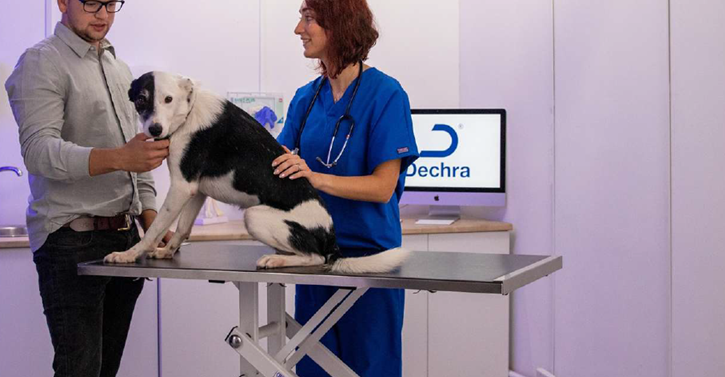
Instead, they often present with subtle, waxing and waning clinical signs that can mimic gastrointestinal disease, renal disease, pancreatitis or a range of other conditions.
Common presenting signs include:
- Lethargy
- Weight loss
- Variable or reduced appetite
- Vomiting
- Diarrhoea
- Weakness
- Collapse
- Increased drinking and urination in some patients
- Dogs that owners describe as simply being "not quite right"
These intermittent episodes can occur over weeks or even months before the disease is recognised, which is why maintaining a high index of suspicion is so important.
Understanding What Happens in Addison's Disease
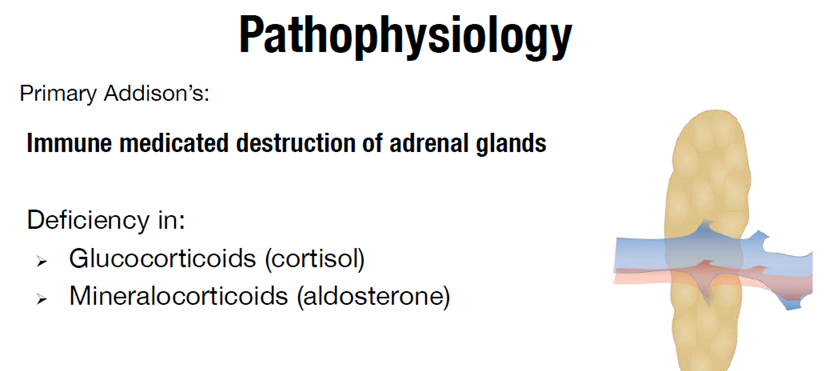
Primary Addison's disease is most commonly caused by immune-mediated destruction of the adrenal glands.
As the adrenal cortex becomes damaged, production of two essential hormone groups declines:
- Glucocorticoids (cortisol) - responsible for helping the body respond to stress, regulate metabolism and maintain normal physiological function.
- Mineralocorticoids (aldosterone) - responsible for regulating sodium, potassium and water balance, helping maintain blood volume and blood pressure.
The combination of deficiencies explains why affected dogs can develop gastrointestinal signs, dehydration, electrolyte abnormalities, weakness and, in severe cases, life-threatening circulatory collapse.
When Should Addison's Disease Be Suspected?
Because clinical signs are often non-specific, diagnosis relies on combining history, physical examination and laboratory findings.
The Dechra/FECAVA diagnostic work-up highlights several important clues:
History
- Chronic waxing and waning gastrointestinal signs
- Weight loss
- Lethargy
- Weakness
- Vomiting
- Diarrhoea
- Collapse
- Shaking
- Abdominal pain
- Melena or haematochezia
- Polyuria and polydipsia in some patients
Physical Examination
Although findings are frequently non-specific, clinicians may observe:
- Thin body condition
- Dehydration
- Painful abdomen
Dogs presenting in an acute Addisonian crisis may exhibit:
- Hypovolaemic shock
- Bradycardia or tachycardia
- Weak pulses
- Poor capillary refill time
- Hypothermia
- Collapse
Laboratory Findings That Raise Suspicion
Routine bloodwork often provides the first indication that Addison's disease should be considered.
Common abnormalities include:
- Hyponatraemia
- Hyperkalaemia
- Reduced sodium-to-potassium ratio
- Low cholesterol
- Low glucose
- Elevated urea and creatinine
- Mild anaemia
- Lack of a typical stress leucogram
- Eosinophilia
- Lymphocytosis
Importantly, the webinar also highlighted that not every Addisonian dog presents with classic electrolyte abnormalities. Some patients may have eunatraemic, eukalaemic hypoadrenocorticism, reinforcing the importance of evaluating the complete clinical picture rather than relying on electrolytes alone.
When Addison's disease is suspected, the ACTH stimulation test remains the definitive diagnostic test, with endogenous ACTH measurement providing additional diagnostic value in selected cases.
Recognising an Addisonian Crisis
Without diagnosis and treatment, some dogs progress to an acute Addisonian crisis, a true medical emergency.
These patients frequently present with:
- Severe dehydration
- Hypovolaemic shock
- Bradycardia secondary to hyperkalaemia
- Marked electrolyte disturbances
- Reduced tissue perfusion
- Collapse
Immediate stabilisation is essential.
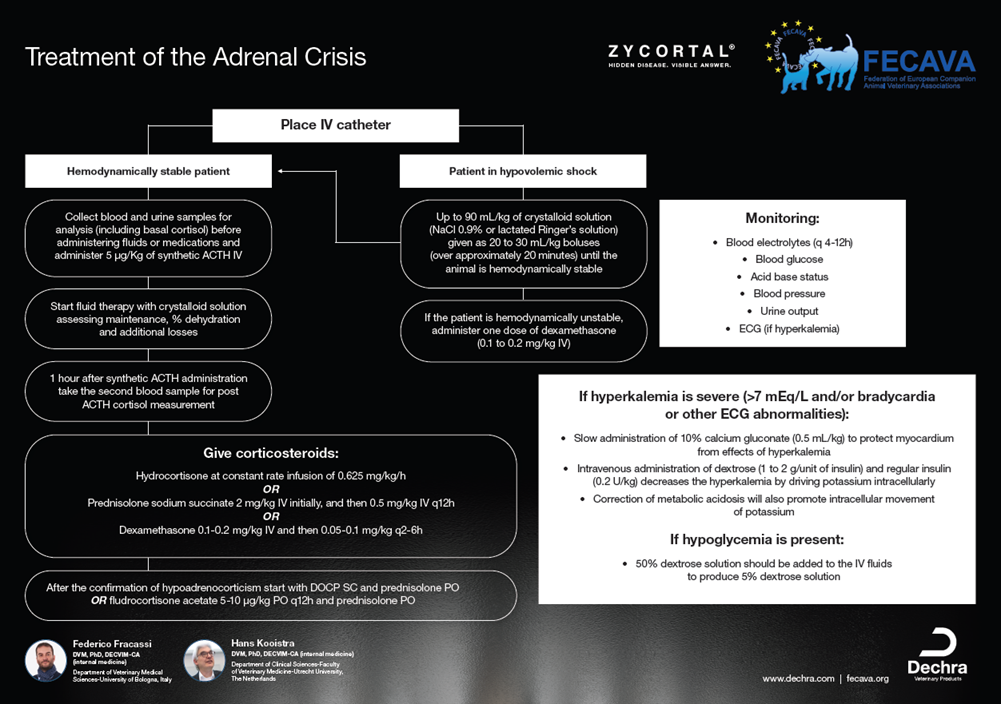
The Dechra Addisonian Crisis Guidelines emphasise prompt intravenous fluid therapy as the priority, careful correction of electrolyte abnormalities, appropriate glucocorticoid administration and ongoing patient monitoring before initiating mineralocorticoid replacement therapy.
Long-Term Management: Individualised Care Matters
Successfully managing Addison's disease extends well beyond making the diagnosis.
One of the key messages throughout the webinar was that every patient should be managed as an individual.
- Regular clinical assessments
- Routine electrolyte monitoring
- Careful adjustment of mineralocorticoid therapy
- Appropriate glucocorticoid supplementation
- Ongoing communication with pet owners
Owners should also understand that although most dogs respond exceptionally well to treatment, Addison's disease remains a lifelong condition requiring continued monitoring and medication.
The Role of Zycortal® in Long-Term Management
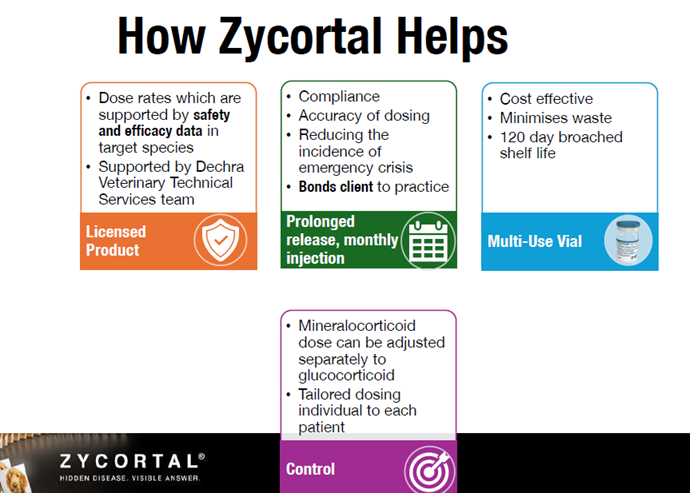
For dogs requiring mineralocorticoid replacement, Zycortal® (desoxycorticosterone pivalate) provides veterinarians with a licensed injectable treatment option as part of a comprehensive long-term management plan alongside daily glucocorticoid therapy.
During the webinar, Dr Bailey discussed several practical advantages that support its use in clinical practice, including:
- Licensed dosing supported by safety and efficacy data in dogs
- Monthly subcutaneous administration
- Independent adjustment of mineralocorticoid replacement while glucocorticoid therapy can be tailored separately
- Individualised dosing based on electrolyte monitoring and clinical response
- A multi-use vial with a 120-day broached shelf life, helping minimise waste
- Ongoing technical support from Dechra Veterinary Technical Services
The webinar also reinforced that achieving optimal control often requires several monitoring visits before each patient's ideal treatment regimen is established. Both Zycortal® and glucocorticoid therapy should be adjusted according to clinical response and monitoring results rather than using a one-size-fits-all approach.
Practical Clinical Resources for Veterinary Professionals
As part of the Dechra Educational Series, attendees also received access to a range of practical clinical tools designed to support everyday decision-making, including:
- Guidelines for the Treatment of Addisonian Crisis
- Canine Hypoadrenocorticism Diagnostic Work-up Flowchart
- DOCP Treatment and Monitoring Flowchart
- Zycortal® Treatment Initiation and Fludrocortisone Switching Protocol
- Practical guidance on monitoring patients receiving Zycortal®
These resources provide structured guidance for diagnosing, stabilising and monitoring dogs with Addison's disease and can help support consistency in clinical practice.
Continuing Veterinary Education Through Partnership
Education remains one of the most valuable tools in improving patient outcomes.
Through our ongoing partnership with Dechra Veterinary Products, The Veterinary Group is committed to providing veterinary professionals across the UAE with access to practical, evidence-based continuing education delivered by leading international experts.
We extend our sincere thanks to Dr Ceri Bailey BVSc MRCVS and the Dechra team for sharing their expertise during this informative session and look forward to welcoming veterinary professionals to future events in the Dechra Educational Series.
References
- Dechra Educational Series Webinar: Diagnosis and Treatment of Addison's Disease, presented by Dr Ceri Bailey BVSc MRCVS.
- Dechra Veterinary Products. Guidelines for the Treatment of Acute Hypoadrenocorticism (Addisonian Crisis).
- Dechra Veterinary Products & FECAVA. Canine Hypoadrenocorticism: Diagnosis.
- Dechra Veterinary Products & FECAVA. Canine Hypoadrenocorticism: Treatment with DOCP and Monitoring.
- Dechra Veterinary Products. Using Zycortal® – 5 Golden Guidelines.
- Dechra Veterinary Products. Zycortal® Treatment Initiation & Fludrocortisone Switching Protocol.
Loading...